


“Breakfast is the most important meal of the day.”
– Everyone’s mother everywhere
This title leaves a lot of room for elaboration. You may feel that this title invokes the importance of breakfast, but in reality, it’s open-ended. Is breakfast important? Should it be mandatory? Does skipping it have any benefits? This is an exploratory post—let’s find out.
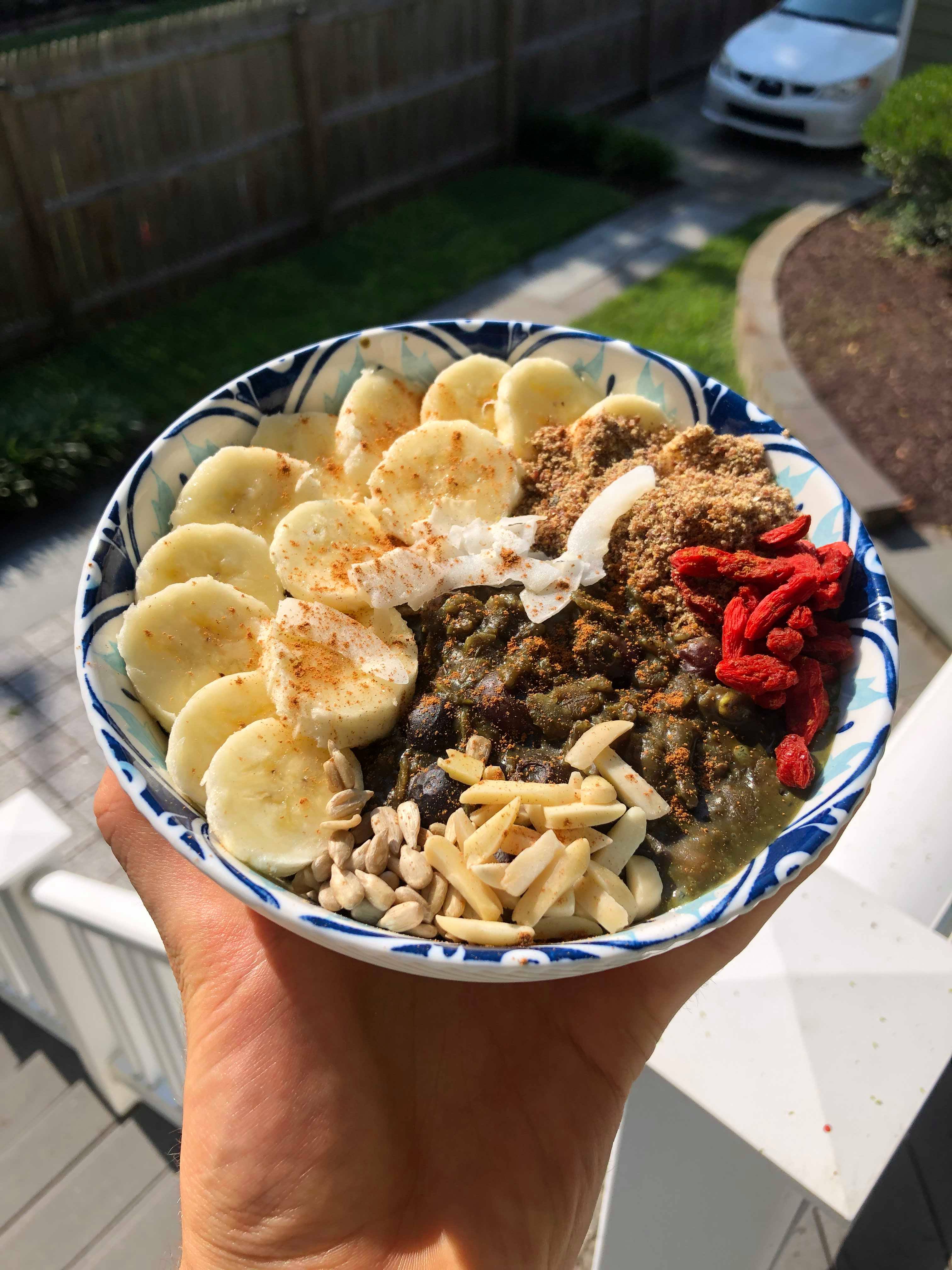
Breakfast = Good?
My hypothesis is that a regular routine of breakfast eating is associated with better health outcomes. This comes from a few lines of reasoning.
Firstly, from anecdotal experience, how many people do you know who skip breakfast and are not exactly a picture of health? I know that in my experience, skipping breakfast is associated with disorganized behaviour, erratic sleeping patterns, and general lack of preparation for the day ahead. This can be true in my own life, but I have observed this subtle pattern in others, too. Of course this anecdotal experience is completely unscientific, and is only meant to help form a hypothesis. I want to make sure that this fact is well understood, as one individual’s experience can be completely misinformed and biased.
Secondly, from some research I have come across in the past, there is a plausible rationale for a benefit of eating early in the day (i.e. breakfast) due to circadian rhythms. Circadian rhythms are “physical, mental, and behavioral changes that follow a daily cycle”(1). They are biological mechanisms that respond most prominently to light and darkness in a person’s environment, for example, sleeping at night time and being awake during daylight. There is a prevailing wisdom that eating in concert with daylight is beneficial on a metabolic level.
Thirdly, starting your day off with a routine/ritual can set you up for a more productive day, which can lend itself to healthier physical and mental states, and thus a healthier lifestyle in general. Again, this is an exploratory opinion on my part, not scientific.
Issue
There’s a glaring issue with the framework I have just laid out, can you think of what it might be?
None of this matters if what you eat is junk! I don’t care how regimented you are with your breakfast, and how it aligns with your natural circadian rhythm, if you’re shovelling down Pop Tarts and coffee with cream and sugar, that is a recipe for disaster.

Okay, with that issue covered, let’s take a look at an opposite stance on breakfast, and the possible benefits of skipping it.
Breakfast = Bad?
For some people, it can be difficult to eat a big meal early in the morning. I have come across a fair amount of people who feel slightly nauseous at the thought of a large breakfast, and they opt for either something light, or nothing at all.

Some people skip breakfast as a form of time-restricted feeding, or intermittent fasting protocol. In this context, there is research to show the possibility of a benefit to skipping breakfast (2,3).
Some people may find skipping breakfast helps them to consume fewer calories in the day—providing a tool to keep slim (although it must be noted that there is an opposite rationale that skipping breakfast can cause overeating later in the day stemming from increased hunger).
Once again, I’m laying these points out as largely exploratory, so please take these arguments with a pinch of salt.
What Does the Data Show?
I searched for studies on breakfast and its association with health through PubMed, a database of millions of scientific articles. Here’s a selection of studies I found:
Observational Data
A meta-analysis of 8 observational studies was conducted to examine the association of breakfast skipping and the risk of type 2 diabetes in different countries (USA, Japan, China, Russia) (4). The pooled data from over 100,000 people in these studies resulted in a 21% increased risk of developing type 2 diabetes for breakfast skippers in the cohort studies involved in this meta-analysis, and an increased risk of 15% for developing diabetes in breakfast skippers in the cross-sectional studies.
Another study grouped people into 3 groups: breakfast skippers, low-calorie breakfast eaters (5-20% of daily calories), and high-calorie breakfast eaters (>20% of daily calories) (5). The low-calorie breakfast eaters had more cardiometabolic risk markers than the high-calorie breakfast eaters, and the breakfast skippers had even more of these risk markers. The breakfast skippers had the greatest waist circumference, body mass index (BMI), blood pressure, blood lipids, and fasting glucose lipids. This translated into the breakfast skippers having a 1.55 times greater risk of noncoronary atherosclerosis, and a 2.57 times greater risk of generalized atherosclerosis—independent of conventional cardiovascular risk factors.
A prospective cohort study conducted on over 80,000 people in Japan found that those who didn’t consume breakfast had a 14% increased risk for cardiovascular disease, a 18% increased risk for stroke, and a 36% increased risk for cerebral hemorrhage vs. those who ate breakfast everyday (6).
Another study on 766 adults (30-79 years) found that skipping breakfast had a significant effect on waist circumference and body mass index (BMI), leading to higher instances of obesity (7).
A prospective study that followed people from adolescence until middle age (27-year follow-up), found a significant relationship between those having poor breakfast habits (defined as skipping breakfast or eating/drinking something sweet for breakfast) at 16 and the risk of having metabolic syndrome vs. those who were regular breakfast eaters as adolescents (8). The risk of developing metabolic syndrome in this group was 68% higher in the poor breakfast eater group vs. regular breakfast eaters, and they were also at a 71% greater risk for having central obesity, and a 75% greater risk for having high fasting glucose levels.
Another prospective study assessed the association between skipping breakfast and cardiovascular and all-cause mortality. In this study, 6,550 adults between the ages of 40 and 75 years old were followed for a range of 17-23 years, and the results showed that after adjustment for confounding factors (age, sex, race/ethnicity, BMI etc.), those who never ate breakfast had an 87% increased risk for cardiovascular mortality, and a 19% increase for all-cause mortality vs. those who habitually consumed breakfast (9).
A study looking at the role of breakfast, and more specifically breakfast quality, on health-related quality of life (HRQOL), stress, and depression in Spanish adolescents had some interesting findings (10). Those eating breakfast had higher levels of perceived stress and poor HRQOL vs. those skipping breakfast. This contradicts conventional wisdom, so the authors further stratified the breakfast eaters into ‘very poor’ (they ate baked items, but no grains/dairy), ‘poor’ (they ate baked items, grains, and dairy), and ‘good’ quality breakfast eaters (they ate grains, dairy, and no baked goods). After doing this, the researchers found that those eating a ‘good’ quality breakfast had better HRQOL and lower levels of stress and depression when compared to those eating ‘poor’ quality breakfasts. Interestingly, those skipping breakfast had better results in HRQOL and depression vs. those eating ‘very poor’ and ‘poor’ quality breakfasts. This finding was also true for perceived stress: breakfast skippers had lower perceived stress levels than those eating ‘poor’ quality breakfasts. This shows that what you eat in the morning may be more important than if you eat in the morning.
Another study looked at how breakfast skipping influenced body weight, nutrient intake, and other markers in participants with metabolic syndrome (11). The results showed that those skipping breakfast ate significantly less throughout the day than those eating breakfast (~190kcal/day less). Skipping breakfast was also associated with a reduction in certain nutrient intakes such as folate, niacin, and thiamine when compared to the breakfast eating counterparts.
What Does This Mean?
In general, the observational data on breakfast consumption favours eating breakfast vs. skipping breakfast. Of the studies mentioned above, 7/9 showed a significant decrease in health markers when skipping breakfast. It’s important to note that eating breakfast may just be a proxy for having healthier habits in general, even though most of the data has been adjusted for in multivariable analyses to try and isolate eating breakfast as the only variable being associated with these health markers, there is always the risk of residual confounding. Let’s take a look at some clinical trials and reviews on this topic, and see what patterns emerge.
Reviews & Clinical Trials
A systematic review of 45 different studies found some data to show that breakfast consumption appeared to have a transient beneficial effect on cognitive function (within 4 hours post-ingestion) in children and adolescents when compared to those eating no breakfast (12). This was shown by breakfast consumption facilitating better attention, executive functioning and memory more reliably relative to fasting. This review also looked at some studies comparing breakfast types. Low-glycemic index breakfasts were most consistently associated with positive effects on attention.
A review on breakfast consumption and its effects on appetite regulation, energy balance (calories in, calories out), and exercise performance concluded that the weight of evidence from intervention studies showed that the omission of breakfast may lead to an increase in calorie intake at subsequent meals, but this increase was generally not enough to make up for the energy omitted at breakfast—thus omitting breakfast led to a reduced total calorie intake, offering a benefit in weight loss (13). Other findings of this review were that omitting breakfast led to an increase in appetite, but it was transient and could be offset by the first meal consumed in the day. Also, the author’s recommend eating breakfast before exercising to maximize performance, after citing some literature to show reduced exercise performance in individuals skipping breakfast vs. those consuming breakfast pre-workout.
A clinical trial divided 283 overweight/obese people into 3 groups: one group were told to eat breakfast every day, one group were told to skip breakfast every day, and one group were told to keep their same dietary pattern (control) (14). After 16 weeks, there were no real differences between any of the groups in weight loss. This trial showed that prescribing people to eat or skip breakfast (with no other guidance) had little to no effect on weight loss in overweight/obese individuals over a period of four months.
A study on 10 young Japanese males pitted a 6-day breakfast regimen vs. a 6-day no breakfast regimen (15). The participants completed one regimen, waited a week, and then completed the other regimen. Energy (calorie) intake was held constant, so in the no breakfast regimen, the lunches and dinners were more calorie dense. The results of this study showed that breakfast skipping caused higher blood glucose levels later in the day, and that the average blood glucose levels were higher in the breakfast skipping regimen compared with the breakfast eating regimen. Other markers collected, such as 24-hour energy expenditure showed no difference between regimens.
What to Make of This?
In these clinical trials and reviews, there doesn’t seem to be a major difference in health markers in those eating or skipping breakfast. Eating breakfast appeared to have a slight benefit in cognitive function, and exercise performance. The data is not extremely compelling one way or the other here, and a lot of the trials are short term, meaning it’s hard to know what would happen in the long run if breakfast was continually omitted in these studies.
Conclusions
What does this data in its entirety tell us? My major takeaway is that what you are eating at breakfast is more important to our health outcomes than the simple fact of either eating or not eating breakfast. Due to the sheer amount of observational evidence correlating breakfast skipping with chronic diseases like cardiovascular disease, diabetes, and stroke, I lean towards eating breakfast over skipping breakfast.
Limitations
Before you agree with my judgement, please take stock of the limitations of my analysis. I was not exactly systematic in my collection of data. This means that the studies I discussed included a wide range of differing populations, and trial designs. This limits the ability to generalize results, and weakens any insights gleaned. This review was also not comprehensive. This means that there may be a number of studies with conflicting results that I did not come across. Finally, don’t take my word for it. Consult the literature yourself, and see whether I’m correct in my description of the data. This is an important point: a lot of misinformation can be passed off as “evidence-based” online. Always read with skepticism.

To summarise, I will continue to enjoy eating my breakfast, and if you love breakfast too, then I see no harm in continuing to enjoy it! If you don’t like it, then don’t eat it.
Have a good week!
References
(1) National Institute of General Medical Sciences. Circadian Rhythms. URL: https://www.nigms.nih.gov/education/pages/Factsheet_CircadianRhythms.aspx
(2) Mattson, Longo, and Harvie (2018). Impact of intermittent fasting on health and disease processes. URL: https://www.ncbi.nlm.nih.gov/pmc/articles/PMC5411330/
(3) Patterson and Sears (2017). Metabolic Effects of Intermittent Fasting. URL: https://www.ncbi.nlm.nih.gov/pubmed/28715993
(4) Bi et al. (2015). Breakfast skipping and the risk of type 2 diabetes: a meta-analysis of observational studies. URL: https://www.ncbi.nlm.nih.gov/pubmed/25686619
(5) Uzhova et al. (2017). The Importance of Breakfast in Atherosclerosis Disease: Insights From the PESA Study. URL: https://www.ncbi.nlm.nih.gov/pubmed/28982495
(6) Kubota et al. (2016). Association of Breakfast Intake With Incident Stroke and Coronary Heart Disease. URL: https://www.ahajournals.org/doi/10.1161/STROKEAHA.115.011350
(7) Watanabe et al. (2014). Skipping Breakfast is Correlated with Obesity. URL: https://www.ncbi.nlm.nih.gov/pmc/articles/PMC4310153/
(8) Wennburg et al. (2015). Poor breakfast habits in adolescence predict the metabolic syndrome in adulthood. URL: https://www.ncbi.nlm.nih.gov/pubmed/24468205
(9) Rong et al. (2019). Association of Skipping Breakfast with Cardiovascular and All-Cause Mortality. URL: https://www.sciencedirect.com/science/article/pii/S073510971933801X
(10) Ferrer-Cascales et al. (2018). Eat or Skip Breakfast? The Important Role of Breakfast Quality for Health-Related Quality of Life, Stress and Depression in Spanish Adolescents. URL: https://www.mdpi.com/1660-4601/15/8/1781/htm
(11) Zhang et al. (2017). The Association Between Breakfast Skipping and Body Weight, Nutrient Intake, and Metabolic Measures among Participants with Metabolic Syndrome. URL: https://www.ncbi.nlm.nih.gov/pmc/articles/PMC5409723/#B11-nutrients-09-00384
(12) Adolphus et al. (2016). The Effects of Breakfast and Breakfast Composition on Cognition in Children and Adolescents: A Systematic Review. URL: https://www.ncbi.nlm.nih.gov/pmc/articles/PMC4863264/
(13) Clayton and James (2016). The effect of breakfast on appetite regulation, energy balance, and exercise performance. URL: https://www.cambridge.org/core/journals/proceedings-of-the-nutrition-society/article/effect-of-breakfast-on-appetite-regulation-energy-balance-and-exercise-performance/7DE3915D5A4D951FEC7FC861448245E6
(14) Dhurandher et al. (2014). The effectiveness of breakfast recommendations on weight loss: a randomized clinical trial. URL: https://www.ncbi.nlm.nih.gov/pmc/articles/PMC4095657/
(15) Ogata et al. (2019). Effect of skipping breakfast for 6 days on energy metabolism and diurnal rhythm of blood glucose in young healthy Japanese males. URL: https://www.researchgate.net/publication/333173571_Effect_of_skipping_breakfast_for_6_days_on_energy_metabolism_and_diurnal_rhythm_of_blood_glucose_in_young_healthy_Japanese_males
 Candid Conscience
Good read man. I’ve had about four to six eggs and regularly two slices of toast and occasionally a bowl of veg for the past three to four years now. So I was curious to see your input. Very informative! Great piece of writing altogether.
LikeLike
Hey Cormac! First of all, thank you so much for reading, that means a lot. Secondly, I honestly do think that having a set breakfast routine is a good way to start your day, at least for me it helps to start my day off correctly. Regarding the food, I would definitely try to incorporate some more fruit and whole grains into your breakfast – and maybe ease back a bit on the eggs. There’s a lot of confusion regarding eggs and their health in the media, which will definitely be an extensive blog post of mine in the future. I’ve had the time to do a lot of digging into the benefits/risks of egg consumption during my time here in DC (for a paper that’ll be published later this year hopefully), and if you’re interested I could send you some studies regarding their health, just let me know. Make sure the toast is whole grain and you’re laughing! And any time of the day for veggies is great!😊 Thanks again for taking the time to read – you are a good man.
LikeLike
Yeah I’ve looked everywhere for studies about eggs. I just eat them so regularly for the protein consumption and yes the bread is always whole grain. Normally I’ll grab a banana or apple afterwards while leaving the house for work or gym but I’ll try incorporating into my breakfast more often. If you could send any studies you have regarding eggs I’d be happy to read it! Thanks a mill and keep up the good writing!:)
LikeLiked by 1 person